
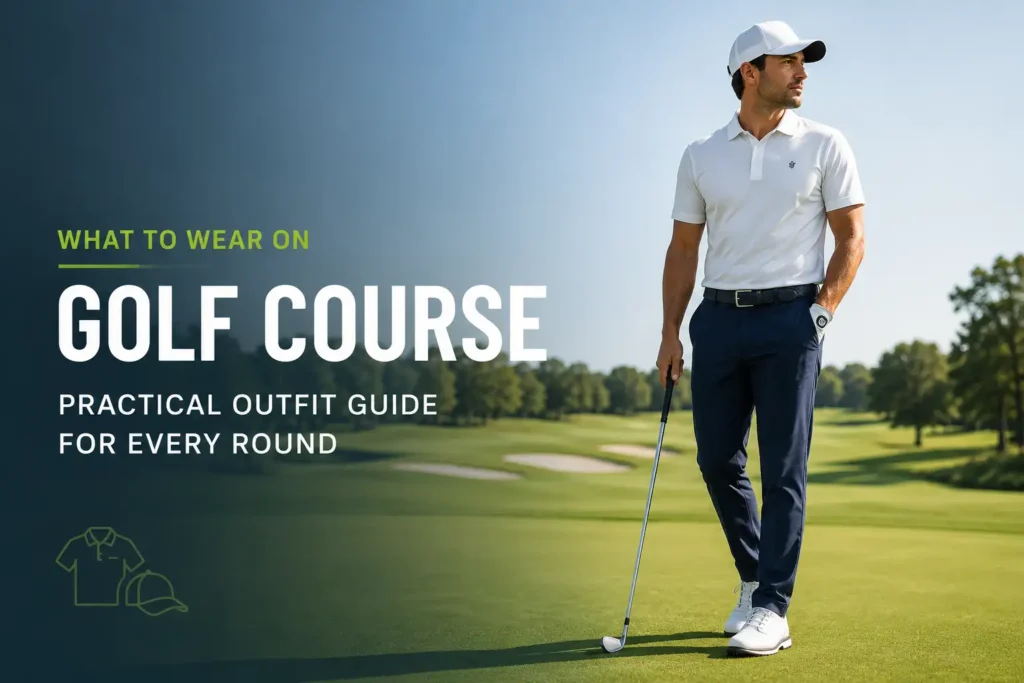
Figuring out what to wear on a golf course shouldn’t feel harder than the round itself. Whether you’re heading to a local muni for the first time or joining a friend at a private club, dressing appropriately comes down to knowing a few reliable rules and adapting them to the venue. This guide from PrimeTopGolf breaks down proper golf attire by item, weather, and course type so you can show up with confidence every tee time.
Quick Answer: What to Wear on a Golf Course Today
The standard outfit most courses accept is simple: a collared polo shirt (which is standard golf attire), tailored pants or shorts with belt loops, proper golf shoes, and a hat or visor. Golf attire is generally neat, comfortable, and designed to allow freedom of movement throughout the swing.
What most golf courses expect:
- Wear collared shirts-polos are the safest choice everywhere
- Tailored golf pants, golf shorts, or a golf skirt instead of gym wear or jeans
- Closed-toe golf shoes with soft spikes or spikeless soles
- Clean, pulled-together appearance-think athletic but traditional golf clothes
Two ready-made outfits a beginner can copy this weekend:
| Men’s Golf Attire | Women’s Golf Attire | |
|---|---|---|
| Top | Solid-color polo, tucked in | Collared golf shirt or mock-neck top |
| Bottom | Khaki chinos or tailored shorts | Knee-length skort or tailored golf shorts |
| Shoes | Clean spikeless golf shoes or neat sneakers | Spikeless golf shoes or clean athletic shoes |
| Extras | Belt, baseball cap, golf glove | Belt or matching accessory, visor, golf glove |
Keep in mind that the golf dress code can vary by course. Always check the course’s rules on their website or booking confirmation so you can match that venue’s dress code standards and know what to wear to golf before you arrive. The rest of this guide breaks down every piece of your golf wardrobe by item, weather, and venue.

Understanding Golf Dress Codes on Different Courses
Golf dress codes exist for a few overlapping reasons: honoring the game’s traditions, signaling respect for the course and fellow players, protecting safety through proper footwear, and maintaining the venue’s image. Most golf courses enforce a traditional dress code to maintain etiquette and atmosphere, but the strictness depends entirely on the type of course you’re visiting.
Municipal courses have the most relaxed dress codes. Public and municipal courses are often more relaxed regarding what golfers wear-many allow neat t shirts, athletic shoes, and sometimes even dark tailored denim. Tank tops, swimwear, and flip flops are still off-limits.
Semi-private, resort, and daily-fee courses step things up. Public courses of this tier require collared shirts and tailored pants or shorts. Many courses discourage denim and overly casual athletic shorts, and cargo shorts, athletic gym shorts, and denim are strictly prohibited on most of these golf courses.
Private clubs enforce the strictest dress codes for golfers. Shirts must be tucked in at most traditional golf courses. Specific skirt and short lengths are often spelled out. Sweatpants, gym hoodies, track jackets, and basketball shorts should not be worn on golf courses of this caliber. Denim of any color or style is universally prohibited on almost all golf courses, and private clubs may have stricter dress codes than public courses for dining areas, clubhouses (where hats are removed indoors), and even the driving range.
A typical U.S. private club in 2026 may require a tucked-in collared polo, Bermuda-length shorts, and dress-style golf shoes. A busy city muni, by contrast, may allow an untucked polo, clean sneakers, and shorter tailored shorts. Different rules apply everywhere-so check before you go.
Core Golf Attire: Tops and Layers
The collared shirt is the foundation of golf style on most courses. Collared shirts are standard attire at most golf courses, making a polo the single safest investment for any golfer.
Standard top options:
- Short-sleeve polo in breathable performance fabrics (polyester-elastane blends wick moisture far better than pure cotton on warm days)
- Long-sleeve polo or button-down for cooler weather or extra sun protection
- Mock-neck tops, particularly popular in women’s golf attire
For men, the typical requirement is a collared golf shirt, often tucked in, with no graphic tees. Women have slightly more latitude-sleeveless polos, fitted mock-necks, and even certain button-downs may be accepted, depending on the venue.
Breathable, moisture-wicking fabrics are recommended for golf attire. Interestingly, only about 7–17% of golf tops carry official UPF labeling, so if sun protection matters to you, look for shirts explicitly rated UPF 30 or higher rather than assuming performance fabrics block UV automatically.
Mid-layers for cooler weather: Lightweight quarter-zip pullovers, vests, cardigans, and golf sweaters that allow a full range of motion without bunching at the shoulders. Stick to stretchy materials and avoid anything that restricts your turn.
Outer layers: Choose windbreakers for early morning tee times when temperatures are still low, and opt for 100% waterproof jackets for rainy conditions. Modern golf rain jackets use quiet, non-rustling fabrics so you won’t distract playing partners mid-swing. A lightweight jacket in a neutral color doubles as a versatile option for changing weather throughout the round.
Traditional courses prefer solid colors, neutral colors, or subtle patterns. Resort and modern layouts tend to accept bolder prints and bright colors-just keep the rest of the outfit clean for a polished look.
Bottoms: Golf Pants, Shorts, Skorts, and Skirts
Bottoms are where golfers most often accidentally break the dress code. Length, fit, and fabric all matter.
What makes proper golf pants: Tailored fit with belt loops (golf pants or shorts must have belt loops), performance stretch fabric for a full range of motion, and classic style colors like navy, gray, khaki, or black. Avoid denim-always. Tailored pants in these colors work at virtually every venue.
Golf shorts standards: Golf shorts should have a hemline above the knee-roughly at or just above-for both men and women. Tailored golf trousers or knee-length Bermuda shorts are appropriate for golf bottoms. You cannot wear shorts that are basketball-length, elastic-waist gym style, or loaded with oversized cargo pockets.
Skorts and golf skirts: Women’s skorts and skirts usually need to provide coverage while bending to tee or pick up a ball. Most clubs set length at no more than three to four inches above the knee, and built-in shorts are standard. A well-fitted golf skirt of appropriate length is a go-to for warm days on the course.
Some clubs publish specific rules-for instance, a 14-inch minimum or “must cover the bottom area when standing and bending.” Always check the dress code page for precise measurements.
Capris and cropped pants are popular in spring and fall, particularly at courses that discourage very short shorts. They’re a smart pick for transitional seasons and work well for insulated golf pants when paired with a thermal base on cold days.

Golf Shoes and Other Footwear Options
Traction and comfort are just as important as style when it comes to golf shoes. Rounds can last four to five hours and cover several miles, so footwear should provide grip and stability on the green from the first hole to the last.
Main golf shoe types:
| Type | Best For | Notes |
|---|---|---|
| Soft spike golf shoes | Maximum grip on wet or hilly courses | Golf shoes with spikes help maintain stance during swings; metal spikes are banned in golf footwear |
| Spikeless golf shoes | Comfort, off-course versatility | Spikeless golf shoes offer comfort and versatility on the course with molded rubber nubs |
| Hybrid sneaker-style | Casual courses, beginners | Look like athletic shoes but meet most course expectations |
Proper golf shoes provide stability and traction during swings, which is why most golf courses require players to wear proper golf shoes. Golf shoes are often required at private golf courses, while some courses allow clean athletic shoes as alternatives to golf shoes-especially municipal courses with relaxed dress codes. Clean athletic footwear may be acceptable at relaxed public golf courses, but running shoes or tennis shoes with dark soles that scuff greens are best avoided.
Socks: Moisture-wicking crew or no-show styles prevent blisters. Some traditional golf clubs prefer plain, low socks rather than loud designs when paired with shorts.
Open-toe sandals, flip flops, and heels are never appropriate on the golf course due to safety and course care. Leave them in the car.
Weather-Ready Golf Outfits: Hot, Cool, and Wet Conditions
Dressing for weather keeps you comfortable and lets you focus on your swing instead of fighting temperature swings during the round.
Hot summer rounds: Wear lightweight, breathable materials for warm weather. A light-colored collared shirt in performance fabrics, breathable golf shorts or a skort, and well-ventilated spikeless or mesh-upper golf shoes will keep you cool on warm days. UV-protective fabric is a smart add, especially for long rounds in direct sun.
Cooler weather in spring and fall: Layer a collared shirt over a thin synthetic or merino base layer. Pair it with golf pants and a light sweater, vest, or quarter-zip that can be removed as the day warms. On chilly mornings, this setup lets you peel layers without violating the dress code. Breathable materials underneath prevent overheating once the sun hits.
Cold days and winter rounds: Layer with thermal base layers for cold weather golfing. Insulated golf pants keep your legs warm, and lined mid-layers plus a beanie or ear warmers add warmth without excessive bulk. Winter golf gloves or hand warmers are essential for maintaining feel on the club. Planning your cold-weather outfit in advance prevents last-minute scrambles.
Rain and wind: Wear breathable rain gear to stay dry without overheating. Rain pants that fit over normal golf clothes, water-resistant golf shoes, and grip-enhancing gloves round out a wet-weather kit. A 100% waterproof jacket is non-negotiable-breathable shells keep you dry without turning your shirt into a sauna.
Always check both the forecast and the course’s dress expectations. Some private clubs restrict hoodies or bulky outerwear even in bad weather, so a tailored softshell or a clean lightweight jacket is the safer play.

Women’s Golf Attire Details: Dresses, Leggings, and Fit
Women face more variety-and more possible confusion-because golf courses differ widely in how strict they are about women’s outfits. The key is knowing which pieces are universally safe and which depend on the venue.
Golf dresses are a popular modern option: athletic cut, performance fabric, usually worn with undershorts for coverage and comfort. A golf dress should meet length requirements (check neckline rules too) and works beautifully at resort and semi-private courses. Stricter private clubs may impose hemline minimums, so verify before you go.
Leggings deserve a direct answer. Many municipal and resort courses now accept full-length leggings or athletic tights, especially under a skirt or skort. Traditional private clubs, however, often still prohibit visible leggings as primary bottoms. When in doubt, layer them under a skort.
Safe go-to pieces for first-time women golfers:
- Collared polo or mock-neck top
- Tailored golf pants or knee-length shorts
- Skort of conservative, appropriate length
- Spikeless golf shoes in a neutral color
Clothing should allow a full turn and comfortable bending without riding up or gaping-this is both functional and respectful. If you already own tennis or activewear pieces, you can often adapt them by swapping in a collared top and wearing longer bottoms. That simple switch typically meets a standard golf course dress code.
Accessories, Etiquette Touches, and Common Mistakes
Accessories are small details that improve comfort, performance, and how you’re perceived on the course.
Functional accessories to pack:
- Golf gloves help prevent blisters during long games-wear one on your lead hand
- Hats or visors protect your face from the sun; visors or sun hats should be worn facing forward
- Sunglasses with polarized lenses reduce glare on the course
- Belts should match your shoes for a cohesive, classic look
- A simple GPS watch or rangefinder in a non-distracting design
Etiquette note: Most courses expect you to remove caps inside clubhouse dining areas, though headwear is fine on the practice green and fairways.
Common dress-code mistakes to avoid:
- Denim jeans, gym shorts, tank tops, crop tops, or graphic tees
- Muddy sneakers or athletic shoes that leave marks
- Overly revealing, very tight, or excessively baggy clothing
- Wearing the wrong footwear-no flip flops, sandals, or heels
Pre-round checklist for beginners: Collared shirt, tailored bottoms with belt loops, appropriate footwear, and one weather-ready layer. If you pass that test, you’ll clear the dress code at most courses without a second thought.
Building a Versatile Golf Wardrobe on a Budget
New golfers don’t need a full closet of golf-branded clothing to play confidently and within dress codes. Start small and build from there.
Minimal starter list:
- 2–3 collared shirts in solid or subtle patterns
- 1–2 pairs of golf pants (one neutral, one darker)
- 1–2 pairs of golf shorts or a skort
- 1 light mid-layer (quarter-zip or vest)
- 1 pair of versatile spikeless golf shoes
How to prioritize purchases: Start with footwear and bottoms-shoes and pants affect comfort and your swing the most. Tops and outerwear can come next. A single pair of quality spikeless golf shoes covers casual and semi-private courses alike, making them the highest-value first purchase.
Repurpose what you own: Clean chinos that fit like tailored pants, a plain polo from your closet, and neat athletic sneakers can get you through a round at most public courses while you decide how much to invest. You can wear golfing plenty of things you already have if they’re clean, fitted, and code-compliant.
PrimeTopGolf’s gear reviews and outfit guides help you choose high-value golf shoes, pants, and tops without overpaying. Your personal style can absolutely shine on the course-you just need the right clothes to start with.
Dressing correctly removes the anxiety of fitting in so you can focus on what actually matters: learning the game, enjoying the course, and shaving strokes off your score. Grab your gear, check the dress code, and go play.
