
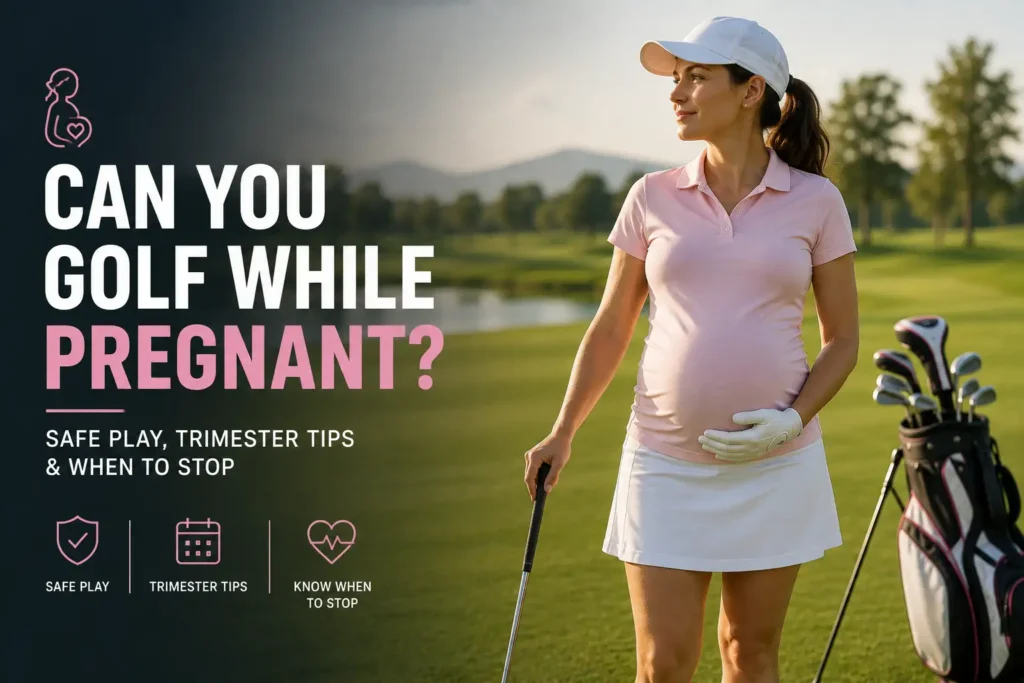
Can You Golf While Pregnant
Quick Answer: Can You Golf While Pregnant?
Yes, you can golf while pregnant in many cases. If your pregnancy is low-risk and your healthcare provider gives the green light, there is usually no medical reason to stop playing entirely though you may need to use lighter equipment, play shorter rounds, take more breaks, and moderate your swing. If you’re a golfer trying to stay active and connected to the game during pregnancy, this guide will help you do that more safely. PrimeTopGolf is a golf-focused content platform, not a medical provider, so always confirm your plans with your doctor, OB-GYN, or midwife before heading to the course.
Here is the short version: golf is usually safe in uncomplicated pregnancies cleared by a healthcare provider, but how you play may need to change as your body changes. Below, we walk through safety considerations, trimester-specific tips, swing and gear adjustments, on-course strategies, warning signs that mean you should stop, and lower-impact ways to enjoy golf if a full round no longer feels right. That balance matters for many pregnant golfers who want to keep the fitness, routine, and enjoyment of the game without ignoring medical advice or their body’s limits.
These recommendations align with 2023–2025 guidance from organizations like the American College of Obstetricians and Gynecologists (ACOG) about moderate exercise in pregnancy, but you must confirm details with your own provider.

Health and Safety Basics: Is Golf a Pregnancy-Friendly Sport?
Golf is a low-impact sport that helps maintain cardiovascular fitness, which is one reason it sits comfortably within modern pregnancy exercise guidelines. Unlike skiing, basketball, or scuba diving, golf involves no collisions, no pressure changes, and minimal fall risk on flat terrain.
Why golf fits the mold:
- Walking the golf course provides moderate cardiovascular exercise without jarring impact.
- Swings are controlled movements that can be modified for intensity.
- Courses naturally provide rest between shots, access to hydration, and bathroom breaks.
By contrast, ACOG specifically flags activities like contact sports, hot yoga, horseback riding, and scuba diving as higher risk during pregnancy.
Asking “can you golf while pregnant?” is partly a question of possibility versus advisability. “Can” speaks to physical ability-whether your body is up for it. “May” speaks to permission-whether your provider allows it given your specific case. In Old English, the ancestor of “can” (cunnan) already carried the idea of knowing how and being able, which connects nicely to knowing your body’s limits before you tee off.
Individual risk factors-age over 35, carrying multiples, high blood pressure, prior miscarriages, or placenta complications-all influence whether golf remains appropriate for you. No two pregnancies are identical.
When to Get Medical Clearance (and When Golf Is Not Recommended)
Every pregnant golfer should have an explicit “yes, you can golf” from a qualified provider before playing, especially for 18-hole rounds or walking courses. Pregnant women should consult their healthcare provider before golfing-full stop.
Providers commonly advise against golf when any of the following are present:
- Placenta previa or elevated bleeding risk
- History of preterm labor or cervical shortening
- Uncontrolled high blood pressure or preeclampsia
- Severe anemia or significant cardiac or respiratory disease
- Multiple gestation with complications (e.g., twins with growth restriction)
- Ongoing vaginal bleeding, severe pelvic pain, or restricted-activity orders
These are considered absolute contraindications to exercise in current medical literature-conditions that are rare enough that most golfers will not encounter them, but serious enough to discuss openly with a provider.
Some “yellow light” conditions may still allow golf with strict modifications-9 holes only, cart use mandatory, no heavy bag, gentle swing. Examples include well-controlled gestational diabetes or mild pelvic girdle pain. Only your provider can decide.
Questions to bring to your next appointment:
- How many days per week and how long per session can I play?
- Are there trimester-specific restrictions?
- What heart-rate or exertion limits apply to me?
- Which warning signs unique to my pregnancy mean “stop immediately”?
Remember that advice can change as pregnancy progresses. The fact that you could golf comfortably in the first trimester does not automatically mean you can continue safely in the third.
Trimester-by-Trimester Guide: How Pregnancy Changes Your Golf Game
Pregnancy is not one uniform stage. Energy, balance, and bump size shift rapidly from week 4 to week 40, and each phase affects how you swing, walk, and recover.
First Trimester (Weeks ~1–13)
Many golfers can maintain routines close to their pre-pregnancy level, but fatigue is more pronounced during pregnancy, affecting golf performance even in these earliest weeks. Nausea, breast tenderness, and dizziness may limit how long you want to stay on the course. Stick to shorter practice sessions, consider 9-hole rounds, and play during cooler morning or evening hours. Watch for early warning signs: dizziness, shortness of breath beyond normal exertion, or spotting.
Second Trimester (Weeks ~14–27)
Often called the “golden trimester,” energy stabilizes and many golfers feel their best. This is typically the most comfortable window for full rounds. However, your growing bump means your center of gravity is shifting. Balance changes due to pregnancy can increase the risk of falls, so minor swing adjustments and extra caution on uneven ground become important. Pregnant women may need to shorten their rounds or modify their activity levels even during this relatively comfortable phase.
Third Trimester (Weeks ~28–40)
Fatigue returns aggressively, back pain intensifies, and your center of gravity shifts dramatically. Walking 18 holes becomes a significant physical effort. Many golfers transition to gentle putting practice, partial rounds, or cart-only play. A common stopping point is around weeks 32–36, though some continue light play later while others feel done by week 28.
These timelines are averages. Some golfers chip wedges into late pregnancy; others step back at 20 weeks. Both are perfectly valid as long as they are medically safe.

Safe Golf Swing Modifications During Pregnancy
The full-power, high-rotation swing that works before pregnancy often needs to soften. The goal shifts from chasing maximum distance to safe, controlled contact with proper form.
Modifications to stance and swing may be necessary as pregnancy progresses. Here is what to adjust:
- Widen your stance slightly for better stability, but do not strain the hips.
- Shorten the backswing to reduce torque on the spine and abdomen.
- Reduce swing speed and accept shorter yardages. Choose more club rather than forcing power-our golf club loft chart can help you select the right option for reduced speed.
- Limit X-factor separation (the gap between shoulder and hip rotation), which puts extra strain on the core and pelvic floor.
Focus on tempo, balance, and center-face contact. Tools like video replay or golf tracer technology can help you monitor changes without overswinging.
Pregnancy hormones can cause joint laxity and increase the risk of injury during a golf swing. The relaxin hormone loosens ligaments throughout your body, making it dangerously easy to overstretch at the top of the backswing. Avoid deep, forced turns. Be especially careful hitting from uneven lies, steep bunkers, or wet slopes where footing is uncertain.
If possible, work with a teaching pro who is comfortable coaching pregnant players and understands basic medical red flags. A good instructor will adapt drills to your changing body rather than pushing you through a standard program.
Managing Fatigue, Hydration, and Heat on the Course
Pregnancy increases cardiovascular load and changes how your body regulates temperature. Staying hydrated and rested is no longer optional-it is essential.
Practical hydration and nutrition guidelines:
- Stay hydrated and avoid overheating while golfing. Drink water or liquids with electrolytes steadily, aiming for a few sips every hole rather than gulping a full cup at the turn.
- Snacks should be packed during golf rounds to maintain energy levels. Easy-to-digest food like bananas, nuts, and granola bars with carbs and protein help keep blood sugar stable. Make sure to eat something every few holes.
- Play early morning or late evening, especially during summer months (June–August in the US), to dodge peak heat.
Fatigue management:
- Normalize walking only some holes and riding in a cart for the rest. There is no rule that says you must walk the entire round.
- Limit to 9 holes-or even 6-if 18 leaves you exhausted the next day.
- Use the “talk test” as a low-tech exertion gauge: if you cannot speak in full sentences without gasping, the intensity is too high.
Heat risk:
- Avoid playing when the heat index climbs above roughly 90–95°F (32–35°C).
- Wear breathable maternity golf apparel, a wide-brim hat, and pregnancy-safe high-SPF sunscreen.
After every round, track how you feel the following day. Extended soreness, headaches, or unusual swelling are signals to scale back and call your provider.
Equipment & Gear Tweaks for Pregnant Golfers
Small equipment changes make golf more comfortable and safer throughout pregnancy. This is where PrimeTopGolf’s gear expertise is especially relevant.
Bag and carrying:
- Switch to a lightweight stand bag or, better yet, a 3-wheel or 4-wheel push cart. Carrying a heavy bag on your shoulders or back is generally discouraged past early pregnancy.
- Riding in a golf cart is often allowed but should be done carefully-slow turns, avoid rough terrain, and stay seated on steep hills to reduce fall risk.
Clubs and shafts:
- Consider lighter graphite shafts if your current set is heavy or stiff. The power loss from a gentler swing can be partially offset by more flexible shafts.
- Adding hybrids or higher-lofted fairway woods helps compensate if long irons become difficult to hit with reduced speed.
Grips and gloves:
- Pregnancy swelling in the hands may call for slightly larger or fresh, tacky grips for better control.
- Carry a backup glove in hot conditions to prevent slipping.
Footwear and support:
- Wear supportive footwear to reduce the risk of slipping on the golf course during pregnancy. Spikeless shoes or soft spikes with strong traction are ideal.
- Orthotic inserts or pregnancy-safe compression socks help manage swelling and plantar discomfort.
Apparel:
Stretchy waistbands, breathable fabrics, and tops that accommodate bump growth while meeting typical dress codes make the round far more comfortable. For ideas on flexible golf attire, check our guide on whether you can wear leggings to golf.
Course Strategy: Playing Smarter, Not Harder While Pregnant
Pregnancy is a perfect time to sharpen your strategic game rather than chasing personal-best drives. Think of it less like a power contest and more like learning to play chess: every move should be calculated to preserve energy and avoid unnecessary risk.
Conservative course-management tips:
- Choose forward tees to reduce total walking distance and required power.
- Aim away from trouble-water, steep bunkers, deep rough-to minimize physically demanding escape shots. Avoid high-risk courses with steep hills during pregnancy.
- Lay up more often. A smooth 7-iron to the fairway is smarter than a heroic 3-wood that lands you in a problem easily avoidable with patience.
A budget golf rangefinder helps you select the right club without guesswork, saving energy on miscalculated shots.
Pace-of-play considerations:
- Communicate honestly with playing partners about needing extra time for restroom or rest stops.
- Schedule rounds at less busy times-weekday afternoons, twilight, or off-peak seasons-to avoid feeling rushed.
Mental safety:
- It is fine to pick up the ball and skip a tough shot or an entire hole if fatigue or discomfort sets in.
- Treat rounds as “practice rounds” where score does not matter. The goal is staying active and enjoying the course.
This period can actually sharpen decision-making skills that improve scoring after pregnancy, which fits PrimeTopGolf’s mission of long-term game improvement.
Warning Signs: When to Stop Mid-Round and Call Your Provider
No golf round is worth risking maternal or fetal health. Stopping immediately at the first serious warning sign is non-negotiable.
Stop play and seek medical advice right away if you experience:
- Vaginal bleeding or fluid leakage
- Sudden, severe abdominal or pelvic pain
- Regular, painful contractions or cramping
- Noticeable decrease or change in fetal movements (later pregnancy)
- Dizziness, fainting, chest pain, or difficulty breathing beyond normal exertion
- Severe headache, visual changes, or significant swelling in hands or face (possible preeclampsia)
Less urgent but still important signs that mean you should dial back intensity:
- Lingering back, hip, or pelvic pain after rounds
- Extreme fatigue lasting more than a day post-play
- New or worsening urinary leakage with swings or walking
Trust your internal sense that “something just isn’t right,” even if you cannot pinpoint it. Leave the course and call your provider rather than pushing through one more hole.
Keep emergency contact numbers-OB office, local urgent care, your partner-saved on your phone. Inform at least one playing partner about your pregnancy status and any restrictions before you tee off.
Benefits of Golf During Pregnancy (Physical & Mental)
With medical clearance, moderate physical activity during pregnancy has well-documented benefits, and golf can be one of the most enjoyable ways to achieve them.
Physical benefits:
- Gentle cardiovascular exercise from walking between shots supports heart and lung health.
- Maintaining muscular endurance in legs, glutes, and core (with careful swing form) helps preserve fitness and posture.
- Regular activity supports healthy weight gain and blood-sugar control, potentially aiding gestational diabetes management alongside diet and medical care.
Mental health benefits:
Golfing can boost mental health and reduce stress during pregnancy. Even 9-hole walks on a local course provide regular “mental reset” time outdoors. Maintaining personal hobbies during a life-changing period counters the feeling that pregnancy cancels normal life. For passionate golfers, staying connected to the game keeps motivation high and makes the eventual postpartum return more exciting.
On days when the course is not an option, you can still engage with golf through online swing analyzers, strategy study, or score calculation practice to keep the mind sharp.
One honest note: not everyone finds golf relaxing. If you feel frustrated or anxious on the course, it may be healthier to shift to other movement like prenatal yoga or walking trails. The point is to preserve your well-being, not prove anything.
Alternatives to Full Rounds: Driving Range, Putting Practice & Simulators
“Golf while pregnant” does not have to mean 18 holes walking in summer heat. A possible alternative that keeps you sharp without the physical toll is to focus on off-course practice.
Driving range:
- Keep sessions short-30 to 40 minutes max-with frequent breaks.
- Focus on wedges, short irons, and tempo drills rather than hammering driver at full speed.
Short game and putting greens:
- Chipping and putting practice involves minimal impact forces yet has a massive payoff for scoring after pregnancy.
- Creative challenges and friendly games with a partner make these sessions fun without exhausting you.
Indoor simulators and launch monitors:
- Golf simulators provide a climate-controlled environment, flat and safe flooring, and easy access to seating. They are a great way to stay connected to the game regardless of weather or energy level. Check our best golf simulators for home guide for options that fit different spaces and budgets.
At-home drills:
- Slow-motion swings without a ball build muscle memory safely.
- Balance and posture exercises with a club in hand reinforce alignment without demanding power.
Mix these alternatives with or in place of full-course play depending on your trimester, health status, and the weather forecast.

Partners, Playing Partners, and Course Etiquette Around Pregnancy
Social support and clear communication make golf during pregnancy safer and more enjoyable.
For partners or spouses:
- Help with bag lifting, loading and unloading from the car, and handling heavier tasks around the round.
- Resist the urge to push for “one more hole” when a pregnant partner is clearly tired.
For regular playing partners:
- Share a quick overview of any limits before teeing off: “I may stop after 9,” “I’m riding the cart on hills today.”
- Foster patience. No teasing about forward tees, extra snack breaks, or leaving early.
Course etiquette:
- Consider informing the pro shop or starter, especially if a cart is medically advised or extra restroom access is needed.
- If breaks slow the round, let faster groups play through. Respect for pace of play in a formal setting helps everyone.
Some older or more traditional club members may still hold outdated views-old fashioned expressions suggesting pregnant women should avoid all physical exertion. Confidently rely on modern medical guidance rather than historical assumptions. Your provider’s spoken advice trumps any clubhouse folklore.
Language Corner: “Can You Golf While Pregnant?” and the Modal Verb “Can”
This section is a bit lighter. The phrase “can you golf while pregnant” hinges on a single, surprisingly complex word-so let us unpack it.
In modern spoken english, “can” functions as a modal verb expressing ability or possibility: “I can golf if my doctor clears me.” It also serves as an auxiliary verb in negative constructions like “I cannot play today.” Look up the definition in the Collins English Dictionary or any standard reference, and you will find senses indicating possibility, ability, and even granting permission, depending on context. In formal contexts, “may” has traditionally been preferred for permission-“You may play nine holes”-while “can” handles ability. In practice, this distinction blurs in everyday speech, and the sense occurs differently depending on region and register. The usage for permission, esp US informal speech, is now the norm rather than the exception.
The word’s roots run deep. In Old English, cunnan meant “to know, to be able.” By Middle English, the form shifted through english canne toward the present tense “can” we use today. Cognates appear across at least three languages: german können, french connaître (sharing a Latin ancestor), and even greek gignōskein-all related terms revolving around knowing or being able. The japanese equivalent maps differently, but the core idea of ability is universal.
As a noun, “can” takes on entirely different meanings. Its plural, cans, refers to a sealed container-typically a metal container made from thin sheet metal or sheet iron coated with tin-used to preserve food like soup and vegetables or to hold liquids. In earlier manufacturing, sheet iron or other metal was stamped into shape; today a plastic container or aluminum is more common. A can is also a container for holding film in photography. In informal and slang usage, a can means a toilet (common in American slang), a trash receptacle, or even a pair of headphones. In military slang, a depth charge was once called a “can.” If your boss canned you, you lost your job-a slang word for being fired. A can making an annoying noise in the wind, a power failure knocking out the canning line-the word shows up everywhere. There are idioms like “can of worms” and the phrase “in the can” means finished. Even synonyms like jar, tin, and cup overlap in certain writing traditions. The word “can” as a verb and noun occur chiefly across informal, formal, and spoken registers-a rare case of one small word carrying so many meanings.
Why does this matter for pregnant golfers? Because understanding the difference between “I can golf” (I have the physical ability), “I may golf” (my provider grants permission), and “I should golf” (it is advisable) shapes every decision on the course. Whether you are a canadian golfer, an American weekend player, or someone who would rather play chess than play golf, the possible alternative reading of “can” reminds us that knowing our limits is itself a form of power. You can solve this problem easily by asking: does my body say yes, and does my doctor agree?
Summary & How PrimeTopGolf Can Help You Play Safely
To answer the core question one final time: yes, many people can golf safely while pregnant with medical clearance, smart modifications, and a willingness to stop if their body or provider says so.
Key takeaways:
- Always get individualized approval and know your personal red flags.
- Soften the swing, favor balance over distance, and use carts or push carts as needed.
- Shorten rounds, avoid extreme heat, and prioritize hydration and rest.
- Respect warning signs and never hesitate to quit mid-round.
- Engage with alternatives like range sessions, putting practice, and simulators on tougher days.
PrimeTopGolf fits into this journey through independent gear guides for lighter bags, forgiving clubs, and supportive shoes. Our tutorials and strategy articles focus on efficiency and smart play-not just raw power. And our reviews of golf tech like rangefinders, simulators, and swing analyzers help pregnant golfers stay connected to the game from home.
Staying safely connected to golf during pregnancy can make your postpartum return smoother and more exciting. You may come back with a more thoughtful, strategic approach to every round-and that is a competitive edge worth the temporary trade-off.
